

You are merging onto The Hutch when a car in the next lane drifts over without warning and clips your rear quarter panel. Your car spins toward the guardrail, and by the time you pull over, the other driver is already arguing that you drifted into their lane. The police report lists both versions. Your insurance adjuster calls it a low-speed contact and offers a number that will not cover your first physical therapy bill.
Greenspan & Greenspan Injury Lawyers know how it feels to have your own account questioned after a wreck that was not your fault. We step in to pull that same police report, gather the evidence that backs up what actually happened, and push back against an insurer that would rather close the file than pay you a fair claim.
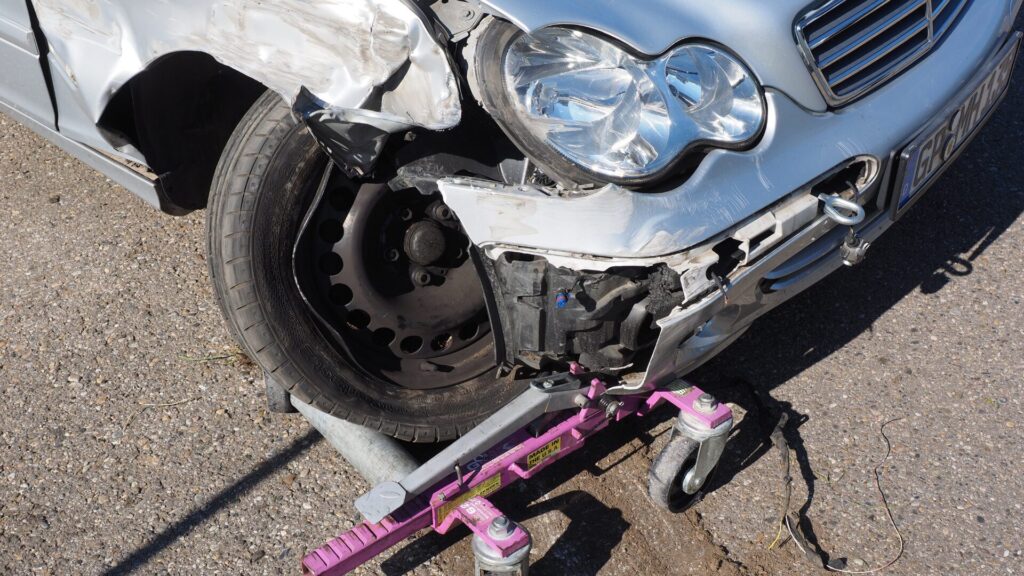
How Does a New York Sideswipe Car Accident Lawyer Determine Fault?
Fault in a sideswipe crash almost always comes down to who left their lane without checking first. A Bronx car accident attorney reviews the point of impact, the damage pattern, and the traffic laws that govern lane changes to determine which driver failed that basic duty, then builds a claim around that evidence rather than letting the insurance company define what your injuries are worth from behind their desks.
What Causes Most Sideswipe Crashes in New York?
Sideswipe collisions happen constantly on busy, multi-lane roads like the Cross County, the Sprain Brook, and the merge points feeding into the Bronx River Parkway. Rush-hour traffic near White Plains and Yonkers packs vehicles so closely that a two-second lapse in attention can turn into a collision. The most common causes include:
- Distracted driving—a glance at a phone replaces a check of the mirror or blind spot;
- Unsafe merging—a driver enters a lane without confirming that it is clear;
- Blind spot errors—a driver assumes a lane is open because a mirror check missed a vehicle;
- Aggressive lane changes—a driver cuts across multiple lanes at once near an exit or highway merge; and
- Construction zone squeezes—lanes narrow suddenly, and drivers misjudge the space between vehicles.
Each of these behaviors points to the same legal problem: a driver who moved without making sure the move was safe.
Who Decides Fault and How Does It Affect Your Payout?
New York law requires every driver to stay within a single marked lane and to confirm the move can be made safely before changing lanes. A driver who drifts, merges without checking, or cuts across multiple lanes without signaling has usually violated that rule, and that violation becomes central evidence of fault.
How New York’s Fault-Sharing Rule Works
Fault in a sideswipe case is rarely assigned to a single driver. New York allows a court to divide responsibility between each driver based on the evidence, and your compensation is reduced by whatever share of fault is assigned to you. If your share of fault is more than the fault of the others involved in the accident, your recovery can be denied entirely rather than simply reduced.
Insurers frequently propose an even fault split by default in disputed sideswipe cases, since it lets them settle without fully investigating either driver’s account. Challenging that default assignment, rather than accepting it, is often the difference between a fair settlement and a barred claim under state law.
What Evidence Does a Sideswipe Accident Lawyer in New York Use to Prove Fault?
Because both drivers often blame each other, proving fault requires more than a verbal account. A strong sideswipe claim typically draws on:
- Dashcam or nearby traffic camera footage that may show the actual moment of the lane change or drift;
- Vehicle event data recorder information that can capture speed, braking, and steering angle in the seconds before impact;
- Damage location and paint transfer that often indicate which vehicle was moving into the other’s lane rather than driving straight;
- The police accident report that includes any documents with statements from those involved in the accident, road conditions, and any citations issued at the scene; and
- Witness statements from other drivers in the area or from pedestrians who witnessed the lane change.
Collecting this evidence quickly matters because dashcam footage gets overwritten and witnesses become harder to reach the longer a claim sits open.
Do You Have to Prove Fault to Get Your Medical Bills Paid?
The distinction that trips up most injured drivers is this: New York’s no-fault system pays your basic medical bills and lost wages regardless of who caused the crash, so many people assume fault does not matter at all in a sideswipe case. It matters a great deal for everything that the no-fault system does not cover.
No-fault benefits are capped and do not include pain and suffering. Drivers who accept a quick no-fault payout and assume the matter is settled often give up a separate, larger claim without realizing it existed.
Why Do Insurers Call Sideswipe Injuries Minor?
Sideswipe impacts often look less dramatic than a head-on or rear-end collision, and insurers use that appearance to justify low offers. The physics tell a different story. A sideswipe can send a vehicle into a guardrail, a barrier, or another lane of traffic, and the sudden lateral force on the body causes injuries that do not show up on the outside of the car, including:
- Whiplash and neck strain—from the sudden sideways jolt of impact;
- Herniated or bulging discs—from the twisting motion a sideswipe often causes;
- Shoulder and rotator cuff injuries—from bracing against the wheel or door; and
- Concussions—even in crashes where the exterior damage looks minor.
New York’s no-fault system caps basic medical and lost-wage benefits at $50,000 per person, regardless of how serious the injury turns out to be. To recover pain and suffering beyond that cap, an injured driver must show what the law defines as a serious injury, meaning a fracture, permanent limitation of a body function, or a comparable significant injury. An adjuster who labels a sideswipe minor is often trying to avoid acknowledging that the threshold has been met.
What If the Other Driver Left the Scene?
Sideswipe crashes produce a disproportionate share of hit-and-run cases, because a driver who clips another car in a moving lane sometimes keeps driving rather than stopping in traffic. New York law requires any driver involved in a crash that causes property damage or injury to stop, exchange information, and report the incident; failure to do so is a criminal offense.
If the other driver flees, take these steps as soon as it is safe to do so:
- Note the vehicle’s color, make, and any part of the plate number you saw;
- Photograph the damage, the road, and any debris left behind;
- Call the police and file a report before leaving the scene;
- Seek medical assistance as your adrenaline may be masking injuries you haven’t felt yet; and
- Contact your own insurer promptly to preserve your uninsured motorist claim.
When the other driver cannot be identified, an injured person is not left without options. Every New York auto policy must include uninsured motorist coverage, which extends to accidents caused by a driver who cannot be found, provided there was physical contact between the vehicles. That physical-contact requirement is one reason documenting the collision immediately matters even more in a hit-and-run sideswipe than in a standard crash.
How Long Do You Have to File a Sideswipe Accident Claim in New York?
Most personal injury claims arising from a car accident in New York must be filed within three years of the crash. That sounds like a long time, but insurance negotiations can drag on for months, and it is easy to assume a claim will remain open indefinitely while both sides talk. It does not. Once that window closes, the court will dismiss the case regardless of how strong the evidence is, so a claim needs to move toward resolution or a lawsuit well before that deadline.
How Does a Lane Change Accident Attorney in NY Handle Your Insurance Claim?
Building a sideswipe case starts long before any settlement talk begins. The early work focuses on securing proof that the insurer cannot later dispute or explain away.
Locking Down the Evidence
A New York attorney moves quickly to retrieve dashcam footage before it disappears, document patterns of damage, and identify every witness who saw the lane change. Speed matters here, since much of this evidence has a short shelf life.
Taking on the Insurance Company
Once the evidence is secured, an attorney may:
- Dispute a fault split that unfairly blames the injured driver,
- Push back on a lowball offer built around the word minor,
- Pursue uninsured motorist coverage when the at-fault driver cannot be found or carries no insurance, and
- Prepare the case for litigation when an insurer refuses to offer a fair number.
Each of these steps builds toward the same goal: a resolution that reflects the actual cost of your injury, not the insurer’s first offer.
Why Clients Trust Greenspan & Greenspan As Their New York Sideswipe Car Accident Lawyer
Sideswipe cases often turn into a swearing contest, my lane versus yours, with the insurer ready to side with whoever moves first. Greenspan & Greenspan has spent more than six decades untangling exactly that kind of dispute for drivers across White Plains, New City, the Bronx, and Yonkers. That local familiarity, knowing the roads, the intersections, the patterns insurers rely on, is part of what has helped turn disputed car accident claims, including a $675,000 settlement, into real results instead of lowball offers. Super Lawyers has recognized our attorneys for the same reason clients keep finding their way back to us: we treat a disputed sideswipe as a case worth fighting, not a coin flip.
Let Greenspan & Greenspan Fight for Your Sideswipe Claim Today
You do not have to take the insurer’s word for who caused your crash. A New York side-swipe crash lawyer at Greenspan & Greenspan can review the evidence, push back on an unfair fault determination, and pursue the compensation your injury actually costs. Schedule your free personal injury consultation and let us start building your case today.
Legal References Used to Inform This Page:
To ensure the accuracy and clarity of this page, we referenced official legal and other resources during the content development process:
- Driving on roadways laned for traffic, N.Y. Veh. & Traf. Law § 1128 (2014).
- Damages recoverable when contributory negligence or assumption of risk is established, N.Y. C.P.L.R. § 1411(b) (2026).
- New York State Department of Financial Services, Auto Insurance Information for Consumers, No-Fault Benefits-Personal Injury Protection (PIP).
- Definitions (Serious Injury), N.Y. Ins. Law § 5102(d) (2026).
- Leaving scene of an incident without reporting, N.Y. Veh. & Traf. Law § 600(1)(a)-(2)(a) (2022).
- New York State Department of Financial Services, Auto Insurance Information for Consumers, Uninsured Motorist Coverage.
- Actions to be commenced within three years, N.Y. C.P.L.R. § 214 (2022).