
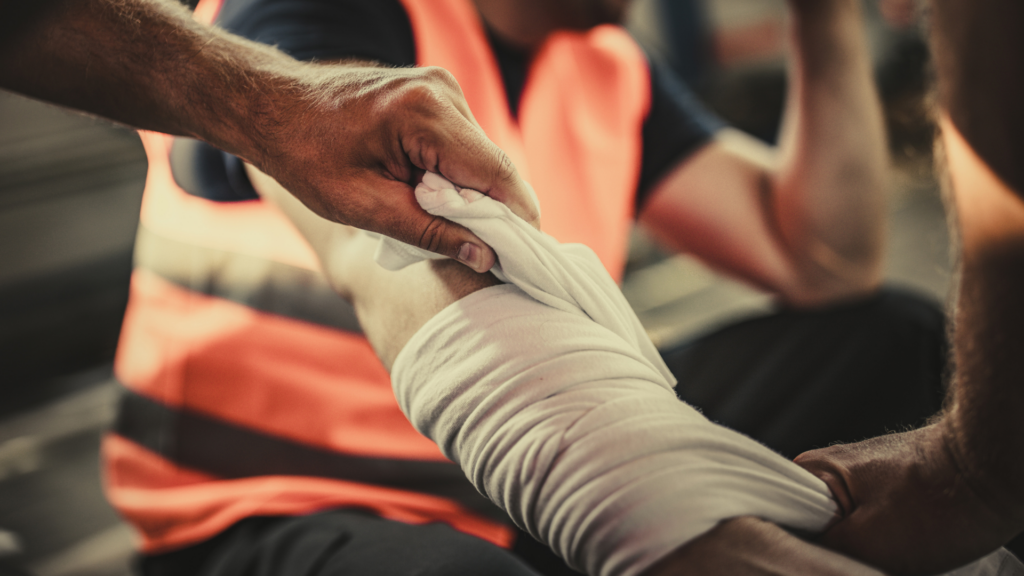
Imagine you are crossing Fordham Road when a car turning off the Grand Concourse rolls through the crosswalk, knocking you off your feet. Or you are behind the wheel, three cars back, waiting for the bus to clear the stop at Fordham Plaza, when a distracted driver on the phone behind you fails to brake and hits you. Maybe you are walking on the sidewalk when your toe catches on a raised slab outside a long-neglected building. Either way, you are left injured, with medical bills piling up and weeks of lost income.
If someone else’s carelessness caused it, the cost should not fall on you. A Fordham, Bronx personal injury lawyer who knows this neighborhood can help build a case around what actually happened.
Greenspan & Greenspan Injury Lawyers represent people injured across the Bronx and greater New York. Our firm handles car, bus, and pedestrian accidents; slip-and-fall and premises liability claims; and construction injury cases against negligent property owners and contractors. We understand that the pedestrian and traffic density in Fordham creates real risk, but it also leaves behind evidence, store cameras, and bus footage that our attorneys know how to secure before it disappears.
Our Practice Areas
Car accidents are a significant part of our firm’s caseload in the Bronx. The intersection of Fordham Road and the Grand Concourse sees constant congestion, frequent lane changes, and a steady stream of pedestrians crossing the mid-block near the shopping strip. A Greenspan & Greenspan car accident lawyer in Fordham, Bronx, will typically handle:
- Collisions involving cars, taxis, and rideshare vehicles;
- Bus and commercial truck accidents;
- Pedestrian knockdowns near crosswalks and transit stops; and
- Bicycle accidents.
Beyond car accidents, our personal injury attorneys handle:
- Slip and fall or trip and fall claims at retail stores, restaurants, and apartment buildings;
- Sidewalk defect claims arising from the cracked or uneven pavement;
- Other premises liability matters, such as inadequate lighting or security in a common area; and
- Construction site injury claims brought against property owners, general contractors, and other responsible third parties under New York Labor Laws.
While our firm does not handle workers’ compensation claims, which are handled by a separate system involving an injured worker’s own employer, we have the experience to handle a wide range of personal injury cases.
What Is the Role of Negligence in a Personal Injury Claim?
Most personal injury claims in New York, including those that arise once the no-fault threshold is met, are built on the legal theory of negligence. To recover, an injured person must show that the other party:
- Owed a duty of care,
- Breached that duty,
- Caused the injury as a result, and
- The injury resulted in real damages.
A driver who runs a red light, a property owner who ignores a known hazard, or a contractor who fails to secure a job site can all be found negligent under the standard.
Comparative Negligence
New York operates under a pure comparative negligence rule, but there’s an important distinction for motor vehicle cases that was introduced in 2026. In personal injury cases, such as slip-and-fall, premises liability, and construction claims, if an injured person is partly at fault, they can still recover damages. However, their percentage of fault will reduce the amount they receive. In motor vehicle accidents, if your share of fault is greater than that of the other at-fault parties, you cannot recover any damages.
The Scaffold Law
Construction injury claims brought by workers on the job site often turn on a single New York statute, the Scaffold Law, which imposes strict liability on owners and contractors when their failure to provide safety devices under the law (e.g., scaffold, ladder, hoist) results in a worker’s elevation-related injury. Under the statute, a defendant generally cannot reduce liability by arguing that the injured worker was partly at fault, which sets New York apart from many other states and makes these claims meaningfully different from ordinary negligence cases.
How Does New York’s No-Fault Insurance System Work?
New York operates under a no-fault insurance system for motor vehicle accidents, and every Bronx personal injury lawyer handling a car accident case needs to explain this system clearly to clients. Under New York Insurance Law, an injured driver, passenger, or pedestrian can recover up to $50,000 in basic economic loss from their own insurer, regardless of who caused the crash. This covers reasonable medical expenses, a portion of lost earnings, and certain other necessary expenses, without the need to prove fault first.
No-fault benefits, however, do not cover pain and suffering, and they are capped. To pursue compensation beyond that cap, or to recover for pain and suffering at all, an injured person must show that the crash caused “serious injury,” falling into one of the following categories:
- Fractures;
- Significant disfigurement;
- Dismemberment; or
- Permanent or significant limitation of use of a body organ, member, function, or system.
Meeting this threshold requires objective medical evidence connecting the injury to the accident. Because the list of qualifying categories has recently narrowed, having a Fordham, Bronx personal injury lawyer review the specific facts of a claim can help you avoid assumptions under the old rules.
What Happens When the At-Fault Vehicle Is an MTA Bus?
Fordham Plaza serves as a transfer point for several MTA bus routes, which means a meaningful share of collisions along this corridor involve a New York City Transit Authority or MTA-affiliated vehicle rather than a private driver. Claims against a public authority are not treated like an ordinary claim against a private party, and knowing early whether a public authority is involved changes how a case has to be built from the start.
An ordinary personal injury claim against an at-fault driver carries a three-year statute of limitations. A claim against the transit authority, by contrast, requires a formal notice of claim served within 90 days of the accident, and the lawsuit itself must be filed within 1 year and 90 days. Missing that window can permanently close the claim against the transit authority, regardless of how strong the underlying facts are.
Why Local Families Choose Greenspan & Greenspan
Handling a case in this neighborhood means understanding how a busy commercial street like Fordham Road actually functions day-to-day, and what that means for how evidence is created, moved, and lost.
At Greenspan & Greenspan Injury Lawyers, we use that local knowledge to locate surveillance footage before it is overwritten and to navigate records requests from both private businesses and public authorities. We clear the path to recovery for Fordham families upended by traffic collisions and unsafe property conditions. Our attorneys are bilingual in English and Spanish, so clients can discuss their case and understand their rights without relying on a translator. Cases are handled on a contingency fee basis, so you do not owe attorney fees unless you recover.
If you have been injured in an accident in the Bronx, contact a Fordham, Bronx personal injury lawyer at Greenspan & Greenspan today.
Legal References Used to Inform This Page
To ensure the accuracy and clarity of this page, we referenced official legal and other resources during the content development process:
- NYC.gov, Office of the Mayor, Fast Buses: Mayor Mamdani Breaks Ground on Offset Bus Lanes on Fordham Road (July 22, 2026).
- Scaffolding and other devices for use of employees, N.Y. Lab. Law § 240 (1) (2014).
- Causes of action for personal injury, N.Y. Ins. Law § 5104(a) (2026).
- Drivers to exercise due care, N.Y. Veh. & Traf. Law § 1146 (2014).
- No-Fault Insurance, Notice,11 N.Y.C.R.R. 65-1.1. (2001).
- Notice of claim, N.Y. Gen. Mun. Law § 50-e (2026).
- Damages recoverable when contributory negligence or assumption of risk is established, N.Y. C.P.L.R. 1411 (2026).
- Definitions, N.Y. Ins. Law § 5102(d) (2026).
- Actions to be commenced within three years, N.Y. C.P.L.R. § 214 (2022).