

 How Can I Prove That the Truck Driver Was Negligent in Causing the Accident?
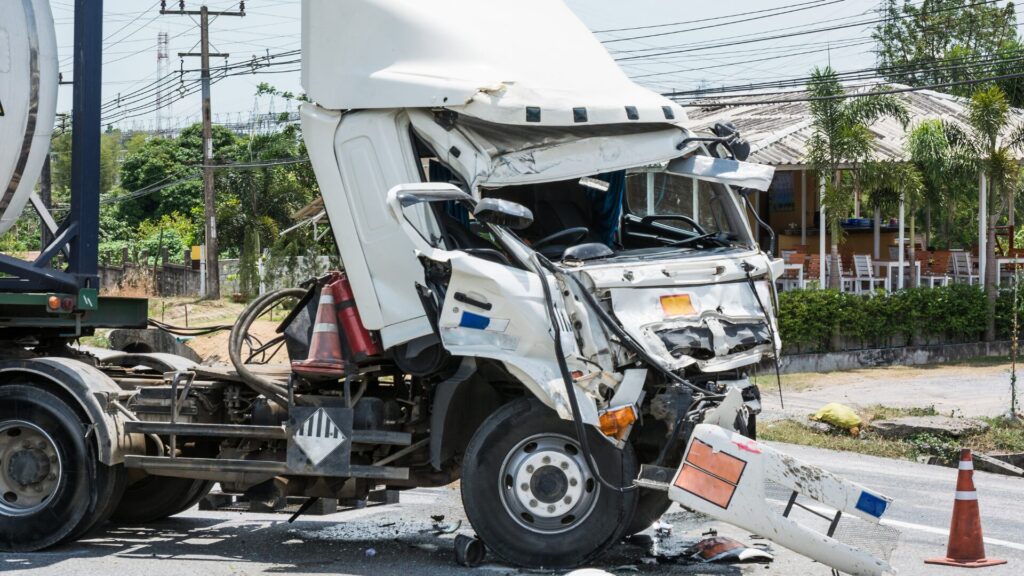
You are stopped at a red light on Route 9 when you hear it before you see it: tires screeching, then metal grinding against metal as a tractor-trailer’s cab and trailer fold toward each other. By the time the truck stops moving, its trailer is blocking two lanes, and your car is pinned inside it, the metal crumpled in around you.
The trucking company’s insurance adjuster calls within days, asking questions that already sound like they are building toward blaming someone or something else entirely, road conditions, another driver, anything but their own company’s driver, and the choices that led to this. Greenspan & Greenspan Injury Lawyers understand how difficult this moment can be. Our New York truck accident attorneys step in at this point to help you walk through the next part of this process.
What Causes Jackknife Truck Accidents?
A jackknife happens when a trailer swings out from behind the cab, and the two halves of the truck fold into a V-shape, most often because the trailer’s wheels lose traction while the cab is still moving forward. This type of truck accident almost always traces back to a specific, identifiable failure rather than bad luck, which is exactly why they can be investigated and why liability can usually be assigned to a person or company.
What Types of Behavior Contribute to Jackknife Accident Causes?
Several behaviors and conditions, alone or combined, tend to trigger a jackknife, including:
- Sudden or excessive braking, particularly on a downgrade or while entering a curve;
- Driving too fast for the road or weather conditions, which reduces a driver’s margin for correcting a skid;
- Wet, icy, or oil-slicked pavement that reduces tire traction between the trailer and the road;
- Cargo that shifted during transit because it was loaded or secured improperly;
- Worn brakes, mismatched brake timing between the cab and trailer, or other mechanical defects; and
- Driver fatigue, distraction, or impairment that delays a response to a developing skid.
Each of these behaviors points toward a different party who may share responsibility for the crash, which is why the cause of a jackknife and the question of who pays for it are really the same investigation.
Is Jackknife Truck Accident Liability Always Pinned on the Driver?
No. A jackknife crash can involve the driver behind the wheel, the trucking company that employed or contracted with that driver, the company that owns the trailer, the business that arranged the shipment, and whoever loaded the cargo, and New York law allows an injured person to pursue as many of those who led to the crash.
The Driver
A driver who braked too hard, drove too fast for conditions, or failed to notice a developing skid can be held directly liable for the resulting injuries due to their disregard for others’ safety. A driver’s disregard often shows up in small, provable ways: ignoring posted speed limits for a grade, following another vehicle too closely to react in time, or continuing to drive after noticing a trailer beginning to sway.
The Trucking Company
New York law holds an employer responsible for the negligent acts of an employee performed within the scope of employment. Beyond that general rule, New York goes further for vehicle owners specifically: the owner of a tractor or trailer is liable for injuries caused by anyone operating that vehicle with the owner’s permission, and when a tractor and trailer are used together, the owners of each can both be liable together or separately.
This matters more than it might seem, because two different companies frequently own a tractor and the trailer it hauls. A rider hurt by a jackknifing truck does not need to sort out which company owned which half of the rig before pursuing a claim; New York law lets both answer for it together.
The Freight Broker
Liability does not always stop with the trucking company. Many shipments move through a broker, a business that connects a shipper with a trucking company rather than owning its own trucks or employing drivers.
In 2026, the U.S. Supreme Court held that a negligent-hiring claim against a freight broker is not blocked by federal transportation law when the broker failed to use reasonable care in choosing a safe trucking company. A broker who selects a carrier with a documented history of safety violations, poor driver qualification records, or hours-of-service violations may share responsibility for a crash caused by the carrier.
The Cargo Loader
When a jackknife traces back to a shifting or unbalanced load, the company responsible for loading the trailer, which is not always the trucking company itself, may bear separate liability for failing to secure the cargo properly.
What Federal Safety Rules Apply to Commercial Truck Drivers?
Commercial truck drivers operate under federal rules, and violations of these rules often become central evidence in a jackknife claim.
Federal hours-of-service regulations limit how long a driver may remain behind the wheel before resting. A driver may not drive more than 11 hours after 10 consecutive hours off duty, and may not drive at all once 14 consecutive hours have passed since coming on duty. Drivers must also take a break after eight consecutive hours of driving. These limits exist because fatigue slows a driver’s reaction time, reducing the time available to correct a skid before it becomes a jackknife.
Federal rules also require most commercial drivers to log their hours on a registered electronic logging device, replacing the paper logs that were once far easier to falsify. That data creates a record that investigators can use to determine whether a driver was fatigued, over their hours, or under pressure from a dispatcher to keep driving past a legal limit.
What Evidence Matters Most in Jackknife Truck Accidents?
Because liability in these cases can spread across several parties, the evidence that proves it must be gathered quickly, before records are overwritten or destroyed. Several important sources of evidence include:
- Black box data. Most commercial trucks carry an electronic control module that records speed, braking, and steering input in the seconds before a crash, information that can confirm or contradict a driver’s account of what happened.
- Electronic logging device records. These show whether the driver was within legal hours-of-service limits or exceeding them at the time of the crash.
- Maintenance and inspection records. Trucking companies are required to maintain their vehicles, and gaps or shortcuts in that upkeep can point toward a mechanical cause behind the jackknife.
- Driver qualification files. These records reveal whether the company properly vetted and trained the driver before putting them on the road.
- Cargo manifests and loading records. These help determine whether the trailer was loaded within weight-and-balance limits.
Trucking companies are not required to hold onto all of this data indefinitely, and some of it, particularly black box and electronic logging data, can be overwritten within days of a crash.
Why Do You Need a New York Jackknife Truck Accident Lawyer?
A trucking company’s insurers do not wait to begin building their defense, and neither should the person they are trying to defend against. A truck accident lawyer can send a formal preservation demand within days of a crash, before a company’s routine data-overwrite cycle erases the very evidence that would show what really happened.
Here is the piece most guides on this topic miss: they tell you to gather evidence, but they do not tell you that New York’s joint liability rule for tractors and trailers, combined with the newly confirmed path to broker liability, means the investigation has to identify every party in the chain, not just the driver’s employer, before you know who you are even up against.
Sorting that out is not a matter of asking the trucking company who is responsible. It is a matter of pulling title records, broker communications, lease agreements, and loading manifests before that paperwork disappears into a filing cabinet nobody has to open.
Why Clients Trust Greenspan & Greenspan with Their Jackknife Truck Accidents
A jackknife accident can involve the driver, the trucking company, and whoever loaded the trailer, and untangling which one caused the crash takes more than a passing familiarity with commercial trucking. Greenspan & Greenspan has spent more than six decades building that familiarity for clients across New York State, as reflected in a 1.4 million dollar settlement for an injured client whose case depended on identifying every liable party. Our attorneys lecture for the New York State Bar Association on insurance law precisely because that depth of knowledge, not a general injury background, is what it takes to hold a trucking company accountable.
Get the Answers You Need Before the Insurance Company Gets Ahead of You
The parties responsible for a jackknife accident are trained not to accept that liability, and the evidence that proves they are does not wait around for you to call an attorney. Schedule your free consultation with Greenspan & Greenspan today and find out who is accountable for your injuries and how we can help.
Legal References Used to Inform This Page
To ensure the accuracy and clarity of this page, we referenced official legal and other resources during the content development process:
- Negligence in use or operation of vehicle attributable to owner, N.Y. Veh. & Traf. Law § 388 (2023).
- Montgomery v. Caribe Transport II, LLC, 608 U.S. ___ (2026).
- Maximum driving time for property-carrying vehicles, 49 C.F.R. § 395.3 (2020).
- Federal Motor Carrier Safety Administration, About ELDS, Improving Safety Through Technology.


