 The Most Dangerous Intersections in New York
The car behind you hit first. That impact pushed you into the vehicle ahead of you. Before you could process what had just happened, a third car struck from behind again. Now you are sitting in a car you cannot drive, your neck is already stiffening, three other drivers are on their phones with their insurance companies, and the police officer taking the report is asking you questions you do not know how to answer.
By the time you get home, two adjusters have already left voicemails, and every one of them represents someone other than you. At Greenspan & Greenspan Injury Lawyers, we untangle the fault questions these crashes create and build the case that protects your interests when every other party at the table is working to protect theirs.
What Makes a Chain Reaction Car Accident Different from Other Crashes?
In a standard two-vehicle accident, fault analysis focuses on two drivers. In a chain reaction crash, the same analysis must account for:
- Every vehicle in the sequence,
- What each driver did before impact,
- How each collision transferred force through the chain, and
- Whether any driver’s conduct contributed to the injuries that resulted.
The number of potentially liable parties multiplies, the physical evidence becomes more complex, and the insurance disputes that follow involve competing adjusters all working to minimize what their insured owes.
How Does a Rear-End Chain Reaction Accident Typically Happen?
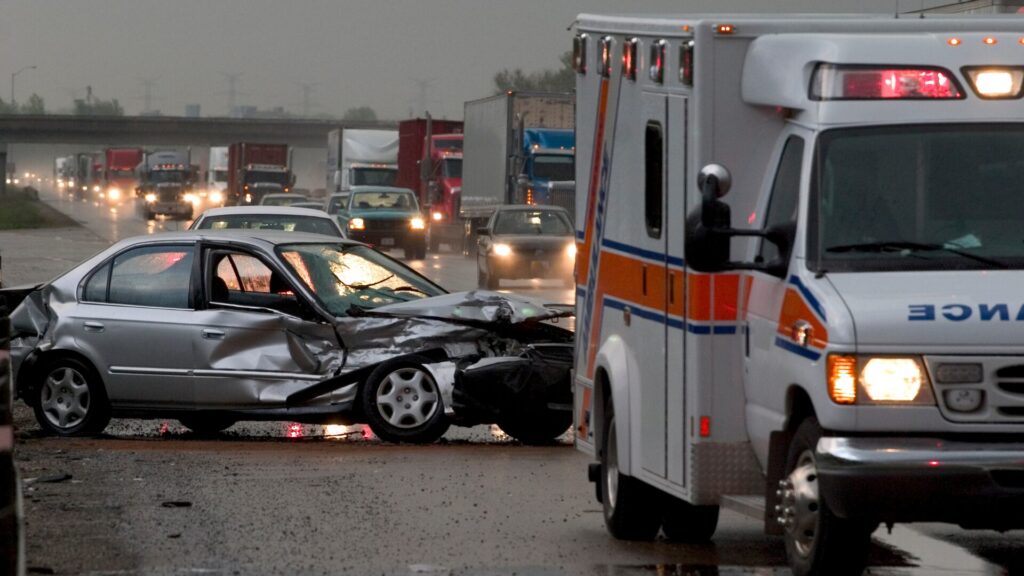
Most of these crashes begin with a single triggering event and spread from there. A driver following too closely cannot stop in time when traffic slows. That impact pushes the struck vehicle forward into the car ahead, which may then strike the next vehicle, and the sequence continues depending on vehicle speeds, following distances, and road conditions. In high-speed highway crashes, reduced visibility conditions such as fog or heavy rain, and abrupt lane changes that force sudden braking all increase the likelihood that a single initial collision will ripple through multiple vehicles.
The driver who initiates the chain does not always bear all the fault. Other drivers in the sequence may have been following too closely, driving at excessive speed, or distracted at the moment the impact reached them, and those individual failures contribute independently to the overall crash and the injuries that result. Fault in these cases rarely belongs entirely to one person.
How Do Investigators Go About Determining Fault in a Pileup Accident?
Determining fault requires assembling evidence from multiple sources and analyzing how each driver’s conduct contributed to the sequence of events. The investigation typically draws on:
- Police reports. The responding officer’s observations, the scene diagram, and recorded statements from drivers and witnesses form the foundation of the fault analysis. Officers may cite one or more drivers for following too closely, inattentive driving, or other violations at the scene.
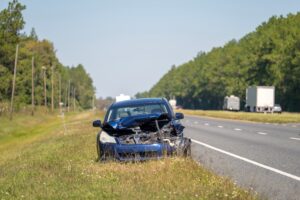
- Vehicle damage patterns. The location, severity, and direction of damage on each vehicle tell a story about the sequence and force of each collision. Rear damage on vehicle two, combined with the front damage, indicates it was both struck and pushed forward.
- Event data recorders. Most modern vehicles record speed, braking, throttle position, and seatbelt status in the seconds before a crash. Downloading and analyzing that data from each vehicle in the sequence can confirm or contradict what drivers reported about their speed and actions.
- Traffic and surveillance camera footage. Highway cameras, business security systems, and dashcam recordings from any vehicle in or near the crash can capture the sequence of events in real time.
- Witness accounts. Drivers of uninvolved vehicles, pedestrians, and passengers in the crash vehicles all provide independent perspectives on how the collision unfolded.
- Accident reconstruction experts. In serious injury cases, engineers who reconstruct crashes from physical evidence, vehicle data, and road conditions provide testimony that holds up under cross-examination when fault is disputed at trial.
The weight of each evidence source varies by case. Still, together they allow an attorney and, if necessary, a jury to reconstruct the full sequence of events and assign responsibility where it belongs.
How Does Multi-Car Accident Fault in New York Work?
How Fault Percentages Work
New York applies a modified comparative fault rule to motor vehicle accidents, meaning a jury assigns each party a percentage of responsibility for the crash. Your own percentage of fault reduces your compensation, and if your share of fault exceeds 50%, you may be barred from recovering damages.
A Real-World Example
In cases involving multiple vehicles, this analysis becomes significantly more complex. Consider a four-vehicle chain reaction on a highway. The jury may find that the first driver bears 60% of the fault for following too closely, the second driver bears 20% for distracted driving, and the third driver bears 10% for a lane change that contributed to the initial impact. The fourth driver is liable for 10% based on excessive speed. Each injured party’s percentage determines the amount they recover or owe based on these circumstances.
Why You Need Your Own Representation
This is where legal representation changes outcomes. The dynamic that most people don’t know is that each insurance company in a multi-vehicle claim employs its own adjuster whose job is to minimize that company’s exposure, often by shifting fault toward other drivers, including you. An injured person without an attorney is the only participant in that process without someone whose role is to specifically protect their interests.
How Does No-Fault Insurance Work in Chain Reaction Car Accidents?
Regardless of fault, every driver injured in a New York car accident can access Personal Injury Protection (PIP) benefits through their own insurance policy. No-fault covers medical expenses and a portion of lost wages up to the policy limit without requiring proof of who caused the crash. In a chain-reaction accident, every injured driver files a no-fault claim with their insurer, making initial medical coverage straightforward even when fault remains contested among multiple parties.
No-fault benefits do not cover pain and suffering, permanent impairment, or economic losses beyond the policy limits. To pursue those damages, the injury must meet New York’s serious injury threshold, and the claim must identify the party or parties whose negligence caused the injury. In a chain-reaction crash, that identification is precisely what the fault investigation establishes, and it is the work that must be done before any serious settlement discussion can take place.
What Compensation Can You Recover in a Rear-End Chain Reaction Accident Case?
When a chain reaction crash causes a serious injury, the damages available go well beyond what no-fault covers. A successful third-party claim can recover:
- Property damage. Vehicle repair or replacement costs beyond what collision coverage provides.
- Past and future medical expenses. All treatment costs from the date of the accident through any future care the injury requires, including surgery, rehabilitation, and specialist follow-up.
- Lost wages and earning capacity. Income lost during recovery and, where the injury permanently affects the ability to work, the projected value of future earnings that the person can no longer earn.
- Pain and suffering. The physical pain, emotional distress, and loss of quality of life the injury has caused, which no-fault does not compensate for at all.
Our firm identifies every defendant, evaluates every applicable insurance policy, and builds a complete picture of damages before considering any settlement offer.
What Should You Do After a Chain Reaction Crash in New York?
The evidence that determines fault in a multi-vehicle accident begins disappearing immediately after the crash. Surveillance footage gets overwritten. Vehicle data recorders require prompt access to preserve their data. Witnesses become harder to locate by the day. Steps that protect your claim include:
- Photograph the scene. Get photos of every vehicle involved, including damage patterns, license plates, and the overall area from multiple angles, before any vehicles are moved.
- Collect contact information. Get the name, phone number, and insurance information of every driver and every witness present.
- Request the police report. Obtain a copy as soon as it becomes available and review it carefully for accuracy.
- Seek medical attention the same day. Even if symptoms seem minor, see a physician and describe every symptom in detail so the record reflects the full picture from the start.
- Do not give recorded statements. Any insurance adjuster who contacts you, including your own, should be directed to your attorney before you say anything on the record.
Contact an attorney as quickly as possible. In crashes involving government vehicles, a Notice of Claim must be filed within 90 days of the accident, and that deadline does not pause while you recover.
Why Chain Reaction Car Accidents Require the Experience Greenspan & Greenspan Brings
Multi-vehicle accidents generate competing insurance claims, finger-pointing between defendants, and legal arguments designed to spread fault as thin as possible. The attorneys at Greenspan & Greenspan Injury Lawyers have spent more than six decades handling exactly that kind of complexity for injured New Yorkers, and Super Lawyers has recognized our attorneys for the quality of that work.
We hold a 4.9-star rating across 219 third-party Google reviews, and our clients leave them because they felt supported throughout a process that is rarely simple. Our firm handles cases across New York State, our staff includes Spanish-speaking team members, and we bring the same intensity to every case, regardless of how many defendants are involved.
You Need Your Own Attorney. Call Us Today.
Schedule your free consultation with Greenspan & Greenspan Injury Lawyers today. The sooner we get involved, the sooner we can identify every liable party and make sure no one in that chain shifts their fault onto you.
Legal References Used to Inform This Page:
To ensure the accuracy and clarity of this page, we referenced official legal and other resources during the content development process:
- Following too closely, N.Y. Veh. & Traf. Law § 1129 (2014).
- Damages recoverable when contributory negligence or assumption of risk is established, N.Y. C.P.L.R. § 1411(b) (2026).
- New York State Department of Financial Services, Auto Insurance Information for Consumers, No-Fault Benefits-Personal Injury Protection (PIP).
- Definitions, N.Y. Ins. Law § 5102(d) (2026).
- Notice of claim, N.Y. Gen. Mun. Law § 50-e (2026).