
 The Most Dangerous Intersections in New York
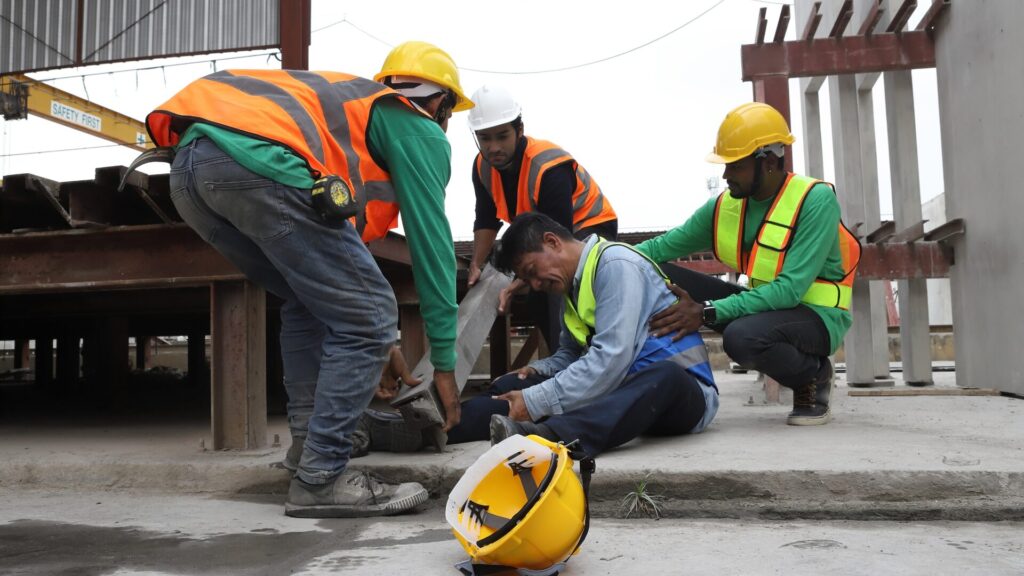
Going to work shouldn’t cost you your health, your livelihood, or your family’s financial stability. But even when you followed your foreperson’s instructions, wore your gear, and did everything right, and still the planking on the scaffold your crew was working on shifted under your weight, you found yourself in the hospital. Now you are looking at a surgery your workers’ comp check will not cover, time off from work, and physical pain, while you worry about your future.
These burdens are not fair, and you should not have to carry them alone. At Greenspan & Greenspan Injury Lawyers, our NYC construction accident lawyers work hard to secure the medical care and financial compensation you rightly deserve so you can focus on healing.
What Does Construction Site Safety in New York Actually Require?
New York imposes some of the most protective construction safety obligations in the country, which fall on property owners and contractors, not just workers. A combination of state labor law, industrial code regulations, and the common law of negligence governs construction site safety in New York. When a responsible party ignores those obligations, and a worker gets hurt, the law provides meaningful paths to compensation that go well beyond what workers’ compensation alone can cover.
What Are the Most Common Construction Site Hazards in New York?
Construction site hazards workers face every day include a wide range of conditions that cause catastrophic injuries, with falls from elevation remaining the leading cause of construction deaths statewide. Other hazards include:
- Falls from scaffolding, ladders, and roofs. Unsecured scaffolding, missing guardrails, and defective ladder equipment send workers to the ground with no warning.
- Falling objects. Tools, materials, and debris dropped from upper floors strike workers below with a force that helmets alone cannot always absorb.
- Trench and excavation collapses. Inadequately shored trenches collapse without warning, burying workers under hundreds of pounds of soil.
- Struck-by accidents. Swinging crane loads, moving vehicles, and unsecured materials all create serious risks in areas where workers and heavy equipment share the same space.
- Electrocution. Contact with unguarded power lines or improperly grounded equipment causes severe burns, cardiac events, and death.
- Equipment failures. Defective power tools, malfunctioning hoists, and poorly maintained machinery injure workers who have no reason to expect the equipment to fail.
The common thread in most of these accidents is not worker error. It is a failure by someone with authority over the site to provide the protection New York law requires.
What Do New York Labor Laws 240, 241, 200 Require?
Three statutes form the foundation of construction injury claims in New York, and understanding what each one does can change how an injured worker views their options.
Labor Law § 200
This section codifies the general duty of employers and site owners to maintain safe working conditions. It applies to injuries caused by dangerous conditions on the site itself and to injuries resulting from the way work was directed or supervised. A claim under Section 200 requires showing that the owner or contractor knew or should have known about the hazardous condition, or that they exercised actual control over the work that caused the injury.
Labor Law § 240
Section 240, often called the Scaffold Law, imposes strict liability on owners and contractors for gravity-related injuries on construction sites. Strict liability means the injured worker does not have to prove negligence in the traditional sense.
When a scaffold collapses, a ladder fails, a worker falls through an unprotected opening, or a falling object strikes someone below, the owner and general contractor are liable for the resulting injuries if they failed to provide adequate safety devices. The law covers the erection, demolition, repairing, altering, painting, cleaning, and pointing of buildings and structures.
Labor Law § 241(6)
Section 241(6) requires owners and contractors to comply with the specific safety rules set out in New York’s Industrial Code. Unlike Section 240, this section is not limited to gravity-related accidents. It covers trench safety, electrical hazards, equipment guarding, fire prevention, and dozens of other regulated conditions. When an owner or contractor violates a specific Industrial Code rule, and a worker suffers injury as a result, Section 241(6) provides a path to liability even where Section 240 does not apply.
How Does Workers’ Compensation Interact with a Labor Law Claim?
Workers’ compensation provides no-fault medical and wage replacement benefits to injured construction workers regardless of who caused the accident. Filing a workers’ comp claim is almost always the right first step.
What most injured workers do not learn until later, and what guides on this topic routinely leave out, is that workers’ compensation and a third-party Labor Law claim are not an either/or choice, as they can work together.
Workers’ comp pays your medical bills and a portion of your lost wages, but it does not compensate you for pain and suffering, permanent disability beyond its scheduled amounts, or the full value of your lost future earnings. A third-party claim against the property owner, general contractor, or subcontractor responsible for the unsafe condition fills that gap. You can pursue both simultaneously, and in serious injury cases, the third-party recovery is almost always substantially larger than the workers’ comp benefit.
Many injured workers leave significant compensation on the table simply because no one told them about the third-party option.
Who Can Be Held Liable for New York Construction Accident Claims?
New York Labor Law places liability on a specific set of parties rather than limiting claims to the injured worker’s direct employer. In a construction accident case, responsible parties can include:
- Property owners. The owner of the building or site carries a non-delegable duty under Sections 240 and 241, meaning they cannot transfer that responsibility to a contractor and then avoid liability when something goes wrong.
- General contractors. The general contractor supervises the overall project and is responsible for site-wide safety.
- Subcontractors. A subcontractor who created or controlled the hazardous condition that caused the injury may face direct liability.
- Equipment manufacturers. When a defective tool, hoist, or piece of machinery causes an injury, the manufacturer may face a product liability claim alongside Labor Law claims.
Identifying every responsible party is one of the most important steps in maximizing the recovery available to an injured worker. Defense teams representing owners and contractors spend considerable effort deflecting responsibility onto other parties. Building a claim that accounts for each party’s actual authority over the site before anyone starts assigning blame is how that deflection gets countered.
What Should a Construction Worker Do After a Site Injury in New York?
The steps you take after a construction accident can directly affect what your claim is worth and who you can hold accountable. Consider doing the following:
- Report the injury. Talk to your supervisor immediately and make sure they write an accident report.
- Seek medical attention. Get help the same day, even if the injury seems manageable at first.
- Take photographs. Include the accident location, the equipment involved, and the surrounding conditions before anything on the site gets repaired or removed.
- Collect witness information. Write down the names and contact information of any witnesses before you start to forget who was there.
- Keep your gear. Preserve any safety equipment or personal protective gear that was in use at the time, and take additional photographs if you are not allowed to remove it.
- Refuse recording or signature requests. Do not say or sign anything from an insurance or workers’ compensation adjuster before speaking with an attorney.
Owners and contractors carry insurance specifically to defend these claims, and their adjusters begin gathering information as soon as they learn of the injury. An attorney can protect your rights from the first conversation and begin the evidence preservation process before critical records disappear.
If someone immediately took you for medical care, and you are unable to get this information, you have not lost your case. Contact us, and we’ll start gathering the evidence needed.
How Greenspan & Greenspan Helps Injured Workers Understand Construction Site Safety in New York
The attorneys at Greenspan & Greenspan Injury Lawyers have lectured on trial practice, insurance law, and legal ethics for the New York State Bar Association and other professional associations. That level of professional engagement reflects the standard we hold ourselves to in every case we take.
We have served injured New Yorkers since 1959, and the knowledge we have developed over more than six decades informs how we approach the complex liability questions that construction site injury claims involve. Our firm handles serious injury cases across New York State, and we work with Spanish-speaking clients in their own language so no one in our communities faces this process alone.
When the insurance company is pushing back, we push harder.
Your Injury Happened on Someone Else’s Watch—Call Us Today
Construction owners and contractors have legal teams working to protect their interests from the moment you report your accident. Schedule your free consultation with Greenspan & Greenspan Injury Lawyers today so you will have someone on your side, too.
Legal References Used to Inform This Page:
To ensure the accuracy and clarity of this page, we referenced official legal and other resources during the content development process:
- U.S. Department of Labor, Occupational Safety and Health Administration, OSHA’s Fall Prevention Campaign.
- General duty to protect health and safety of employees, N.Y. Lab. Law § 200 (2014).
- Scaffolding and other devices for use of employees, N.Y. Lab. Law § 240 (2014).
- Construction, excavation and demolition work, N.Y. Lab. Law § 241 (2014).
- New York State, Workers’ Compensation Board, Workers’ Compensation.