

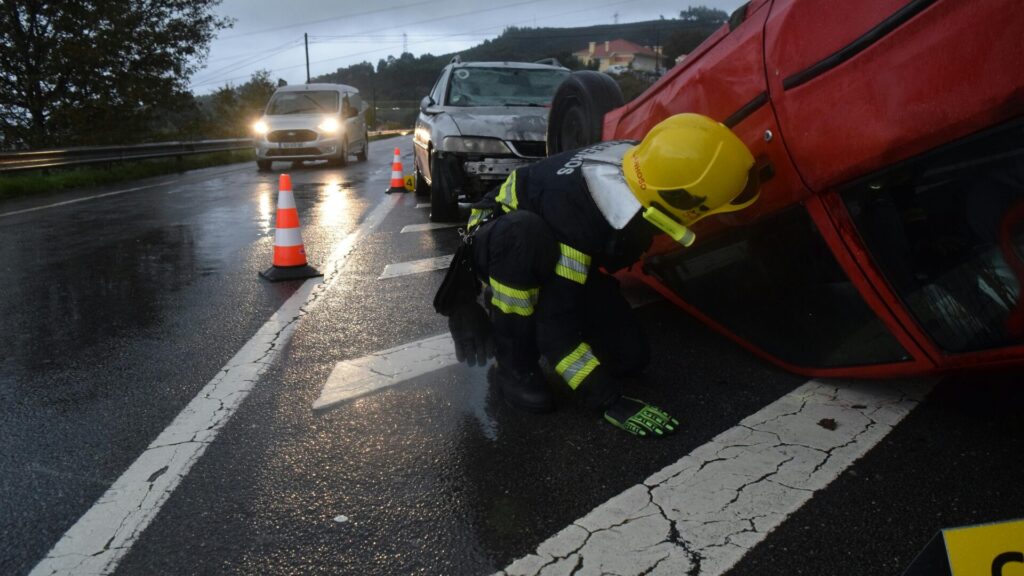
You feel your SUV lift on the passenger side. Before you understand what is happening, the world turns over, once, twice, and stops with the roof where the road used to be. When you unbuckle and climb out, the vehicle looks like something else entirely, and so does your body. Pain in places you cannot yet name, blood running down your face, glass in your hair, a stranger’s voice telling you not to move.
In the days after, an insurance adjuster starts asking pointed questions about your speed, your seatbelt, and whether you swerved. Since you hung up, you’ve been worried if you said too much. Greenspan & Greenspan Injury Lawyers know what that concern feels like. We step in here, take over those calls with the insurance company, and walk you through what comes next.
What Would a New York Rollover Accident Lawyer Say You Should Do After an Accident?
A Bronx car accident lawyer would tell you that the first steps matter: seek medical care immediately, even if you feel fine, and avoid giving a recorded statement to any insurance company before speaking with an attorney. After that, we can help you understand your legal options if you were hurt in a rollover, whether it happened on the Taconic State Parkway, a rural road upstate, or a residential street in Yonkers.
What Causes a Rollover Accident?
Rollovers occur when a vehicle’s momentum shifts its weight toward one side faster than its tires can compensate, and they often involve multiple contributing factors, including:
- A sudden, sharp steering maneuver—swerving to avoid an object or another vehicle, especially at highway speed;
- A vehicle’s design and center of gravity—since taller vehicles like SUVs and vans are more prone to tipping than lower, wider passenger cars;
- Tire failure—blowouts caused by worn tread, underinflation, or a manufacturing defect;
- Road conditions—soft shoulder, a steep embankment, or a pothole that catches a wheel and causes it to dig in; and
- Excessive speed for a curve or ramp—increases the lateral force a vehicle has to withstand before it tips.
Because so many of these factors can combine in a single crash, determining which one actually caused a rollover often takes a careful, attorney-led investigation rather than a quick read of the police report.
Why Are Rollover Injuries Often More Severe?
A rollover exposes occupants to multiple impacts in a single crash, as the vehicle can strike the road several times as it rolls, each impact adding its own force to the occupants. The roof, which is not designed to bear the vehicle’s full weight, can collapse inward toward occupants during a roll, reducing the space they have to remain safely inside.
This combination is why rollovers cause a higher share of severe injuries relative to other kinds of crashes, even when the vehicle involved does not appear as visibly damaged as it would after a head-on collision or a high-speed rear-end crash.
Who Can Be Held Responsible for a Rollover Crash?
More than one party can share responsibility for a rollover, and identifying all of them is the key to holding the right people accountable.
The At-Fault Driver
A driver who causes a rollover through reckless or careless driving, excessive speed, or a failure to maintain control of their vehicle can be held liable under ordinary negligence principles, the same legal standard that applies to any car accident in which one driver’s carelessness injures another person.
The Vehicle Manufacturer
Sometimes a rollover happens not because of anything the driver did, but because the vehicle itself was unreasonably dangerous to begin with. New York law allows an injured person to hold a manufacturer responsible when a vehicle’s design creates a risk that outweighs its usefulness, even without proving the manufacturer was careless.
This is a different legal path than a typical negligence claim. Instead of asking whether the manufacturer made a mistake, the question becomes whether the finished product itself was unreasonably dangerous once it left the factory. A vehicle with an unusually high center of gravity, a roof that crushes too easily in a rollover, or tires prone to sudden failure can each become the basis for this kind of claim.
The Tire or Parts Manufacturer
When a specific component, rather than the vehicle as a whole, is responsible for the rollover, the company that made that part can face its own claim, separate from the vehicle manufacturer. A defective tire that loses its tread at highway speed is one of the more common examples, since a sudden blowout can pull a vehicle sideways before a driver has any real chance to correct it.
The Government Entity Responsible for the Roadway
When a poorly maintained road, a missing guardrail, or an unmarked hazard contributes to a rollover, the government body responsible for that road may also bear some responsibility. In New York, claims against government entities are subject to stricter requirements, so contacting a rollover crash lawyer in NY right away is vital so you don’t miss any deadlines.
What Evidence Matters Most in a Rollover Accident Case?
Because a rollover can result from several causes at once, the evidence gathered in the hours and days after a crash carries significant weight in determining what actually happened, including:
- Vehicle event data. Many vehicles record speed, braking, and steering input in the seconds before a crash, information that can help confirm or rule out driver error.
- The tires involved in the crash. Preserving the actual tires, rather than discarding or replacing them, allows an expert to examine them for signs of a manufacturing defect.
- Roof and frame damage. How the vehicle’s structure held up during the roll can point toward a design or manufacturing issue separate from anything the driver did.
- Scene photographs and roadway conditions. Documenting the road itself before repairs or weather changes the scene can reveal a contributing hazard that might otherwise go unnoticed.
A vehicle involved in a rollover is sometimes repaired, sold for salvage, or otherwise altered within days of a crash, so preserving it and its components early can matter as much as the medical evidence that follows.
How Does a Seatbelt Affect a Rollover Injury Claim in New York?
Rollover crashes raise seatbelt questions more often than other kinds of collisions, since ejection risk climbs sharply when an occupant is unrestrained during a roll. New York law draws an important line here: whether you were wearing a seatbelt cannot be used to argue you caused the crash, but it can be used to argue you contributed to the severity of your own injuries, and only if one party specifically raises it as a defense.
In practice, this means an insurer cannot tell you the rollover was your fault because you were not wearing a seatbelt, but it might still try to reduce what it pays for your injuries on that basis.
How Do New York’s No-Fault Rules Apply to a Rollover Accident?
New York requires drivers to carry No-Fault insurance, which pays for a portion of your medical bills and lost income after a crash regardless of who caused it. But No-Fault benefits do not cover pain and suffering and are often insufficient to cover the full cost of a severe rollover injury. To pursue compensation beyond No-Fault benefits, an injured person generally needs to show their injury meets New York’s serious injury threshold. Qualifying injuries include:
- Death or loss of a pregnancy,
- Permanent physical disability or incapacitation,
- Irreversible physical restriction,
- Severe functional impairment, and
- Fractures.
Rollover crashes frequently produce injuries severe enough to meet this standard, including spinal injuries, traumatic brain injuries, and injuries caused by ejection or partial ejection from the vehicle.
What Compensation Is Available for a Car Rollover Injury Claim in New York?
Compensation may include several categories of loss once a case moves beyond No-Fault benefits, such as:
- Medical treatment already received, including hospitalization and surgery;
- Anticipated future medical care, such as ongoing physical therapy or rehabilitation;
- Lost income if the injury affects your ability to work, now or in the future; and
- Pain and suffering tied to the physical and emotional impact of the crash.
Rollover injuries often require extended treatment, and a case built solely on immediate medical bills can leave real, future costs uncovered.
Why Does Your Case Need a Rollerover Accident Attorney in New York?
Here is what most guides on this topic skip over: they tell you to gather your medical records and file a claim, but they do not tell you that a rollover often has more than one legal cause that you can pursue. An insurance company only has to investigate enough to support the story that benefits it, usually, that you lost control of the vehicle. On the other hand, we will look at the vehicle’s potential failures, not just who was at fault for the accident.
Vehicle data, tire remnants, and roadway evidence can all disappear or degrade quickly after a crash, which is why this kind of investigation works best when it starts immediately, not after an insurance company has already settled on its version of events.
If You Need a New York Rollover Accident Lawyer, Greenspan & Greenspan Is Here for You
Rollover crashes often leave injuries that outlast the wreck itself, and insurers move quickly to look for any reason to pay less once the immediate crisis passes. Greenspan & Greenspan has represented New York families through cases like this since 1959, a track record the National Trial Lawyers recognized by naming our firm to its Top 100 Civil Plaintiff list. That same standard shows up in daily practice: a 4.9-star rating based on more than 200 Google reviews from families in White Plains, New City, the Bronx, and Yonkers who found an attorney willing to look past the initial settlement offer.
Get the Full Picture Before You Accept Their First Offer
A rollover crash rarely has a single, simple cause, and the insurance company investigating yours is not looking for the full picture. Greenspan & Greenspan will investigate what actually caused your vehicle to roll and pursue every party responsible. Schedule your free personal injury consultation today and find out what happened and what your case may be worth.
Legal References Used to Inform This Page:
To ensure the accuracy and clarity of this page, we referenced official legal and other resources during the content development process:
- Operation of vehicles with safety seats and safety belts, N.Y. Veh. & Traf. Law § 1229-C(8) (2026).
- New York State Department of Financial Services, Auto Insurance Information for Consumers, No-Fault Benefits-Personal Injury Protection (PIP).
- Definitions (Serious Injury), N.Y. Ins. Law § 5102(d) (2026).