
 The Most Dangerous Intersections in New York
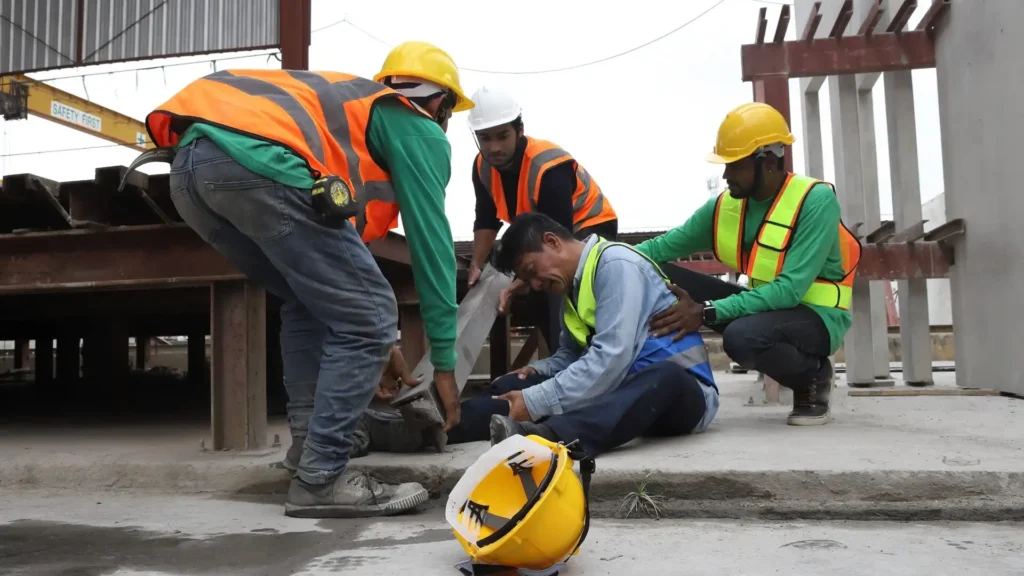
Every morning, tens of thousands of construction workers climb scaffolds, operate cranes, and trench the earth across New York City. In the Bronx, mixed-use towers push northward. In Brooklyn, redevelopment sweeps through Williamsburg. In Manhattan, luxury high-rises demand round-the-clock labor. New York builds without stopping, and when contractors cut safety standards, the human cost is devastating.
A New York construction accident is rarely random. It is, most often, the predictable consequence of someone’s failure to follow the law. If you have been injured, your situation is part of a well-documented pattern, and your legal rights extend far beyond what most injured workers realize.
Greenspan & Greenspan Injury Lawyers has spent decades helping injured New Yorkers recover the compensation they deserve. Our Bronx construction accident attorneys are well-versed in New York’s complex construction laws and know how to identify every party responsible for your injuries. We offer free consultations, work on a contingency fee basis, and serve Spanish-speaking clients in their primary language.
Client Story — Construction Accident
Frank Alessandri vs. a Negligent Job Site
Frank Alessandri — in his own words
Injury Type
Construction Site Injury
Location
White Plains, NY
Client
Frank Alessandri
Background
Union steamfitter and pipe welder, 40+ years
While working on a job site in White Plains, a pipe fell through a floor opening and crushed Frank’s hand. The injury required multiple surgeries and kept him out of work for months. Frank knew he did nothing wrong and believed negligence played a role in the accident.
After a trusted referral, Frank contacted Mike Greenspan while still recovering in the hospital. The legal team moved quickly. Investigators went to the job site and preserved evidence. Frank stayed informed at every stage of the case and felt supported throughout the process.
“From the beginning, Greenspan and Greenspan treated Frank and his family with care, urgency, and respect.”
— Frank Alessandri, construction accident clientPrior results do not guarantee a similar outcome.
How Common Are Construction Accidents in New York?
The New York City Department of Buildings (DOB) tracks construction injuries and fatalities at construction sites across the five boroughs through its annual Construction Safety Report. The report excludes road and transit infrastructure projects, meaning the true scope of danger is broader than these figures reflect.
In 2024, the DOB recorded 638 construction-related incidents, with 482 people injured and 7 workers killed. In 2025, incidents dropped to 432, and injuries fell to 320, the lowest on record. But fatalities rose from 7 to 10. Fewer people were hurt; more people died. The DOB acknowledged reversing that trend as a top priority.
The borough breakdown for 2025: Manhattan led with 148 incidents involving injury or fatality, followed by Brooklyn with 73, the Bronx with 52, Queens with 44, and Staten Island with 3. Falls remained the leading cause of construction-related injuries and fatalities across all the boroughs, as they have year after year.
The 10 workers who died in 2025 were not victims of unforeseeable accidents. Each death involved preventable failures, including:
- Missing fall protection,
- Hazardous unaddressed surfaces,
- Improperly rigged loads,
- Expired permits, and
- Attempts to conceal fatalities from authorities.
These were the predictable results of decisions made by people who chose not to act.
What Does OSHA and Statewide Data Reveal?
The DOB’s numbers tell only part of the story. The New York Committee for Occupational Safety and Health (NYCOSH) publishes its Deadly Skyline report using data from the Bureau of Labor Statistics, the New York State Department of Labor, and the Occupational Safety and Health Administration (OSHA). Because it captures all construction sectors, its numbers are consistently higher.
In 2024, NYCOSH reported 19 construction worker deaths across New York City, nearly 3 times the DOB’s figure. New York City’s construction fatality rate in 2024 stood at 9.4 deaths per 100,000 workers, more than 6 times the citywide average of 1.5 per 100,000 across all industries. A construction worker in New York is more than six times as likely to die on the job as the average worker. That is not a marginal difference.
Why Have the Numbers Not Improved?
Several systemic factors explain why these numbers persist despite years of enforcement efforts. These factors include:
- Fewer inspections. OSHA inspections in New York State fell by 29% from 2019 to 2025. The lack of aggressive enforcement allows contractors to take greater chances with safety.
- Smaller fines. The average OSHA fine for a construction fatality fell to $25,295 in 2024, the lowest since 2017. Lower fines do not deter contractors from cutting corners to save money.
- More open positions. The DOB carried a staff vacancy rate of 12.6% as of April 2026, more than double the citywide agency average. Fewer investigators continue to limit the capacity for proactive inspections.
The hazards that killed those workers were documented, not hidden.
Are There Certain Workers at Greater Risk for Accidents?
The data on who bears the greatest risk matters. Latino and Hispanic workers make up approximately 18.6% of New York State’s workforce, but accounted for 25.8% of all worker fatalities in 2024, compounded by language barriers, job insecurity, and fear of retaliation.
The difference between being a union or non-union worker also impacts the number of workplace accidents. Eighty-one percent of construction workers who died statewide in 2024 were non-union, reflecting the weaker safety oversight and reduced protections that characterize non-union sites.
What does this mean for you? The conditions that caused your injury were almost certainly part of a documented pattern, not an isolated incident.
What Are the Most Common and Devastating Injuries?
OSHA’s Fatal Four account for the majority of construction deaths and injuries in New York; they include:
- Falls from elevation. Falls are the deadliest hazard. Seven of the 10 workers who died on New York City building construction sites in 2025 fell to their deaths, including from a catwalk at the Waldorf Astoria, from a seventh-floor balcony in Flushing, and from a rooftop in Jackson Heights, where no harness or tie-off existed.
- Struck-by incidents. Workers face risks from swinging loads, falling materials, collapsing walls, and moving equipment. In 2025, one worker died at 355 Exterior Street in the South Bronx when an improperly managed excavator load shifted and struck him.
- Electrocution. Electrocution remains a persistent threat near live wires during excavation and renovation. One worker died in 2025 from severe burns sustained during welding at an unpermitted renovation in Manhattan.
- Caught-in and caught-between incidents. These incidents include workers trapped in machinery, pinned between equipment and fixed structures, or buried in trench collapses. A Bushwick trench collapse in early 2026 injured two workers after inspections were skipped, and structural integrity failed.
When workers survive these accidents, the injuries are rarely minor. Traumatic brain injury, spinal cord damage, crush injuries, severe burns, and amputation are among the most common documented outcomes; many require multiple surgeries, months of rehabilitation, and result in permanent disability.
Who Is Legally Responsible and What Can You Recover
If you were hurt on a New York construction site, your employer is not the only party responsible. New York law holds a broader range of parties accountable, with three main statutes being central to most construction injury claims:
The Scaffold Law
The Scaffold Law applies when a worker is injured by a fall or by a falling object from a scaffold, ladder, roof, or an unprotected floor opening, due to missing or inadequate safety equipment. Property owners and general contractors, not just your direct employer, are held strictly liable regardless of whether they knew about the hazard.
The law asks one question: Was proper protection in place? If not, liability attaches. This law can support recovery for the full value of medical bills, lost wages, reduced future earning capacity, and pain and suffering.
The Industrial Code
The Industrial Code establishes specific safety requirements, scaffold design, floor-opening protection, lighting, material storage, and machinery use that every general contractor and property owner must follow. When contractors violate these rules, and a worker is injured, the owner and contractor are accountable even if they were not the worker’s direct employer.
General Negligence
General negligence law applies when a property owner or general contractor created or knew about a dangerous condition and failed to correct it. If a supervisor directed unsafe work or a building owner allowed hazardous conditions to persist, they can be held liable.
These claims are pursued independently of any workers’ compensation you may receive, but you can pursue both simultaneously.
Time Limits Are Strict
You generally have three years from the date of your accident to file a personal injury lawsuit. For a wrongful death, the executor or administrator of the deceased’s estate has two years from the date of death to file a claim. If a government entity owns the site, you have just 90 days to file a Notice of Claim. Missing that deadline can eliminate your right to recover entirely.
When the Dust Settles, What Happens to You?
A New York construction accident is never just a statistic. Behind every number in every construction accident New York report is a worker who woke up that morning and drove to a job site, and a family that received a phone call that changed everything. The data tells us that what happened to you was almost certainly foreseeable, preventable, and the result of someone’s decision to prioritize speed or cost over your safety.
New York labor laws exist for exactly this reason: to hold the people who controlled the site, the equipment, and the conditions legally responsible for what happened to you. When a contractor cuts corners, when a property owner ignores a known hazard, when a subcontractor skips a required inspection, the law gives you and your family the means to demand accountability and pursue the compensation you need to rebuild your life.
Let Greenspan & Greenspan Handle Your Construction Accident Claim
Greenspan & Greenspan Injury Lawyers has served this community for over 60 years. Our firm is built on a singular conviction: that no injured New Yorker, regardless of language, immigration status, union membership, or financial resources, should face the legal system alone. Our NY personal injury attorneys have continuously translated that conviction into results for injured construction workers and their families across the five boroughs.
You have already taken the biggest risk of your life simply by showing up to work. Hiring an attorney should not feel like another gamble. Our firm works on a contingency basis, meaning you pay nothing unless we recover compensation on your behalf. If we do not win, you owe us nothing. Contact us today for a free consultation.
Legal References Used to Inform This Page
To ensure the accuracy and clarity of this page, we referenced official legal and other resources during the content development process:
- New York City Department of Buildings, 2023 Annual Construction Safety Report (May 2024).
- New York City Department of Buildings, 2025 Construction Safety Report (2025).
- New York Committee for Occupational Safety and Health (NYCOSH), Deadly Skyline Report (May 2026).
- OSHA Outreach Courses, OSHA Fatal Four Hazards: What To Know In 2026 (December 24, 2025).
- General duty to protect health and safety of employees; enforcement, N.Y. Lab. Law § 200 (2014).
- Scaffolding and other devices for use of employees, N.Y. Lab. Law § 240 (2014).
- Construction, excavation, and demolition work, N.Y. Lab. Law § 241(6) (2014).
- Protection in construction, demolition, and excavation operations, 12 NYCRR § 23 (2022).
- Actions to be commenced within three years, N.Y. C.P.L.R. § 214(5) (2022).
- Actions to be commenced within one year and ninety days, N.Y. C.P.L.R. § 217-A (2014).