

You are stopped at the light on the Grand Concourse when the impact throws you forward, then back into your seat. It was not a hard hit. The bumper barely has a mark on it. You exchange information, feel a little shaken, and drive home, telling yourself it is nothing. The next afternoon, you cannot turn your neck without a jolt of pain running down your arm. When you call the other driver’s insurance company, the adjuster’s first question is about the damage to your car, not your body.
Greenspan & Greenspan Injury Lawyers know your pain is real. We are here to help you move forward as we talk to the insurance company, the doctors, and, if necessary, a jury on your behalf.
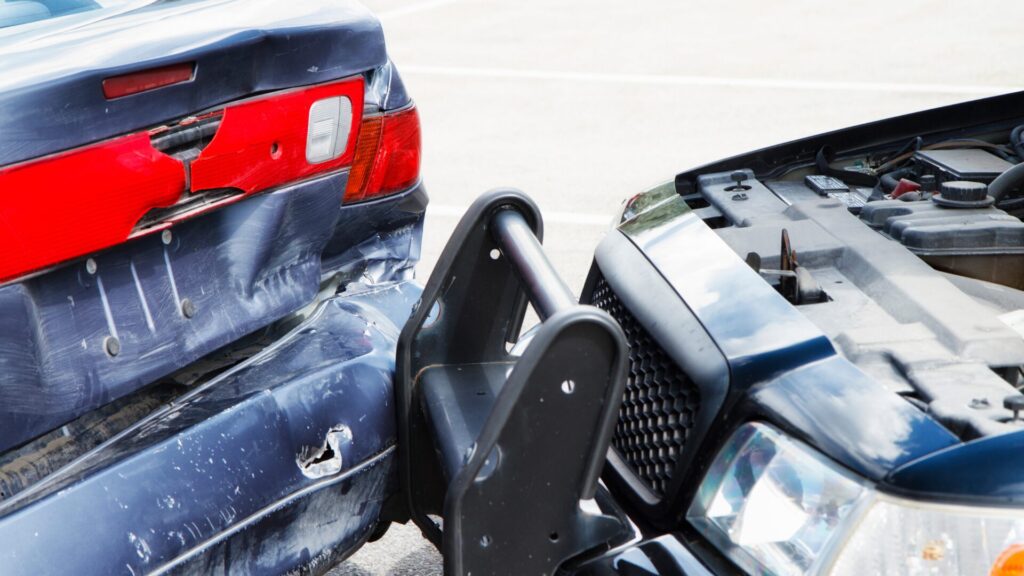
Do You Need a Bronx Rear-End Collision Accident Lawyer After a Crash?
Yes. An accident lawyer in Bronx can help you if an insurance company is treating your crash as minor when your injuries tell a different story. Many rear-end collisions look mild from the outside: low speed, minimal damage, no obvious trauma, yet still cause real, lasting injuries. If your pain did not show up right away, or if an adjuster is pushing back on your claim, a Bronx personal injury lawyer can make sure your case is judged by what actually happened to your body, not by what happened to your bumper.
Who Is at Fault in a Rear-End Collision?
New York law imposes a duty on every driver to leave enough space behind the vehicle ahead to stop safely, taking into account speed, traffic, and road conditions. Because of that duty, New York courts generally treat a rear-end collision with a stopped or slowing vehicle as evidence that the rear driver was negligent, unless that driver can offer a real explanation for what happened that wasn’t due to unreasonableness. In practice, this means the driver who hits you from behind usually starts in a difficult position, not the other way around.
That presumption is not automatic proof, though, and it can be challenged. A rear driver may argue that the front vehicle stopped suddenly and without warning, or that a sudden hazard forced the collision. Courts have generally held that an ordinary stop in traffic, even a fast one, is not, on its own, enough to escape responsibility, since drivers are expected to anticipate that traffic ahead of them may stop.
What Counts as a Valid Excuse for Rear-Ending Someone?
New York courts have accepted only a narrow set of explanations as enough to rebut the presumption that a rear driver was negligent. A few recurring scenarios come up often enough to be worth understanding on their own, such as:
- An unjustified sudden stop. A front driver who slams on the brakes without any visible reason, rather than slowing normally for traffic, may share responsibility. However, courts generally still expect a following driver to anticipate sudden stops in traffic.
- Brake-checking. When a front driver intentionally brakes hard to provoke or scare the driver behind them, that aggressive conduct can shift meaningful fault onto the front driver, if it can be proven.
- Equipment failure on the lead vehicle. Non-functioning brake lights or a burned-out third brake light can remove the warning a following driver would normally have, which can factor into how fault is assigned.
- A vehicle’s automatic braking system engages without cause. Some vehicles equipped with automatic emergency braking have been known to brake suddenly in response to a false sensor reading, with no actual hazard present, a modern wrinkle that can complicate a straightforward rear-end claim.
Proving any of these requires more than a driver’s own account of what happened. Dashcam footage, vehicle event data, and witness statements are often essential to determining whether one of these unusual circumstances actually applies.
What Injuries Are Common in Rear-End Collisions?
Rear-end crashes tend to produce a recognizable set of injuries, largely because of the way the body moves during impact. Those injuries include:
- Whiplash and neck injuries. The sudden forward-then-back motion of a rear-end crash can strain or tear the soft tissue in the neck, sometimes without any symptoms for a day or more.
- Back and spinal injuries. Herniated discs and other spinal injuries are common, particularly when the impact happens while a person is seated and unable to brace.
- Shoulder and arm injuries. Seatbelts absorb much of the force in a rear-end crash, which can strain the shoulder or arm restrained by the belt.
- Head injuries. Even without striking anything inside the vehicle, the rapid back-and-forth motion of a rear-end crash can cause a concussion or other brain injury.
- Jaw and dental injuries. The forward jolt of a rear-end impact can cause a person’s jaw to clench or strike against itself, leading to jaw pain, cracked teeth, or damage to dental work.
- Wrist and hand injuries. A driver bracing against the steering wheel on impact can strain or fracture the wrist, an injury that is easy to dismiss as unrelated to the crash itself.
- Psychological symptoms. Anxiety about driving, difficulty concentrating, or sleep disruption can follow a rear-end crash just as they follow other traumatic events, even when the physical injuries are relatively minor.
Many of these injuries are not immediately apparent. Adrenaline and shock can mask pain for hours or days after a crash, which is part of why so many rear-end injuries are dismissed early on, by insurers and sometimes by the injured person themselves.
Why Do Insurance Companies Dismiss Low-Speed Rear-End Crashes?
Insurers regularly argue that minimal vehicle damage means minimal injury. That argument is not medically accurate. The human body does not need a crumpled bumper to sustain a real injury, and a low-speed impact can still generate enough force to strain the neck, back, or spine, particularly when the person struck saw it coming in the rearview mirror and braced themselves so much that their body didn’t flex with the sudden movement.
Insurance companies rely on this assumption because it is an easy, visual argument to make to a claims adjuster or a jury, even when it does not hold up medically. Overcoming that argument takes documentation connecting the crash to the specific injury, and often the input of a medical professional who can explain why a low-speed impact caused real harm.
What Should You Do If Your Symptoms Appear Days Later?
Delayed symptoms are common after a rear-end crash and are not a sign that an injury is not real. If pain, stiffness, numbness, or headaches appear a day or two after the crash, seek medical care immediately and be direct with your provider about when the crash happened and when the symptoms started. That timeline, documented in your medical records, becomes important evidence later. Waiting to seek care, or downplaying the pain because the crash felt minor, gives an insurance company an opening to argue your injury came from somewhere else entirely.
How Do New York’s No-Fault Rules Apply to a Rear-End Collision?
New York requires drivers to carry No-Fault insurance, which pays a portion of medical bills and lost income after a crash regardless of fault. But No-Fault benefits do not cover pain and suffering, and they often fall short of covering serious injuries.
To pursue compensation beyond No-Fault benefits, an injured person generally needs to show their injury meets New York’s serious injury threshold, which includes a fracture, severe functional impairment, and irreversible physical restrictions, among other qualifying injury types. Whiplash, herniated discs, and other common rear-end injuries can meet this threshold when they are properly documented and shown to limit a person’s function significantly.
What Evidence Helps a Disputed Rear-End Injury Claim?
When an insurer disputes whether a low-speed crash actually caused an injury, the following evidence gathered afterward becomes the center of the case:
- Photographs of both vehicles taken immediately after the crash help establish the actual force of the impact, even when the damage looks minor;
- Consistent, complete medical records, starting from the first visit and continuing through every follow-up, help connect the injury directly to the crash rather than to some later, unrelated cause; and
- A written timeline of when symptoms appeared and how they progressed can also carry significant weight, since insurers often try to use any gap or inconsistency in the timeline against an injured person.
In some disputed cases, a Bronx rear-end accident lawyer can bring in an accident reconstruction expert, who can also help demonstrate how much force a low-speed crash actually transferred to the people inside the vehicle.
When Should You Hire a Rear-End Crash Attorney in the Bronx?
Most rear-end crashes settle through insurance claims, but a lawsuit becomes a real option when an insurer refuses to acknowledge a legitimate injury, offers a settlement that does not come close to covering medical bills and lost income, or disputes whether the injury meets New York’s serious injury threshold at all. A lawyer can push the case toward litigation when negotiation alone is not resolving it fairly, using the same evidence, medical documentation, and legal presumption of fault that applies from the start of the claim.
Why You Can Trust Greenspan & Greenspan as Your Bronx Rear-End Collision Accident Lawyer
Rear-end collisions get treated as minor by insurers almost by default, even when the injuries are not, because the crash itself looks unremarkable on paper. Greenspan & Greenspan has focused on the Bronx and the surrounding suburbs of White Plains, Mount Vernon, and Yonkers since 1959. That focus is why the National Trial Lawyers Top 100 Civil Plaintiff list recognized our attorneys for handling cases based on what a client actually experienced, not on how the police report reads. Our 4.9-star rating across more than 200 Google reviews reflects clients who found that distinction mattered when it counted.
Learn What Options You Didn’t Know You Had
A minor-looking crash can still leave you with a serious, lasting injury, and you deserve a whiplash car accident lawyer in the Bronx to build a case around what you are actually experiencing, not what your bumper looks like. Greenspan & Greenspan will help properly document your injury and push back against an insurance company that tries to call it minor. Schedule your free injury consultation today and find out what your case may be worth.
Legal References Used to Inform This Page:
To ensure the accuracy and clarity of this page, we referenced official legal and other resources during the content development process: