
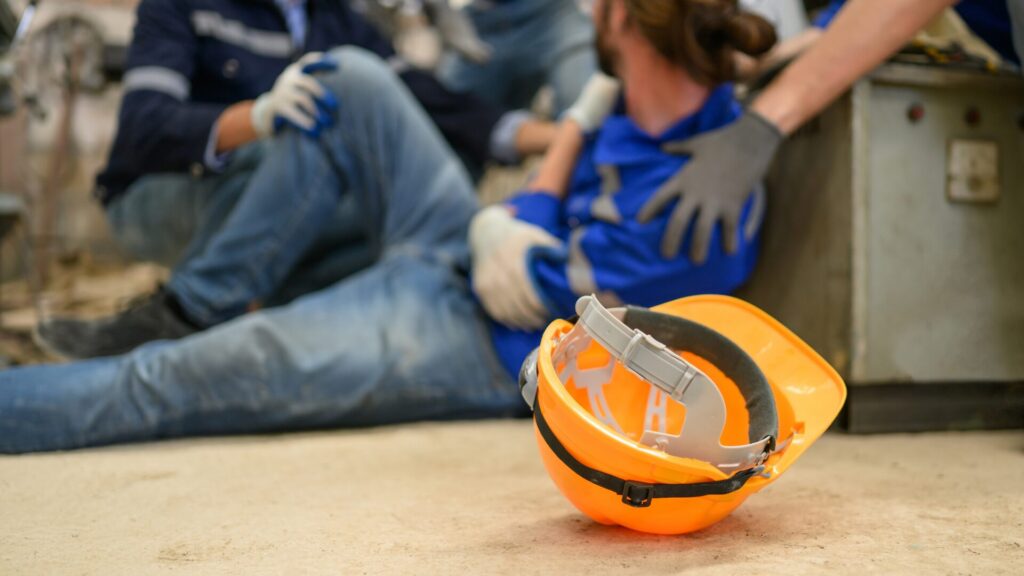


You do not have to work in construction to get hurt by it. On any given morning in New York, you might be walking past a demolition project in the Bronx, cutting through Downtown Brooklyn near Atlantic Avenue, or heading to the subway on West 57th Street when falling debris, a collapsing sidewalk shed, or an unsecured load of materials strikes you without warning.
Many construction accidents in New York involve ordinary people: pedestrians, drivers, and bystanders. When you suffer injuries because a contractor cut corners or a property owner failed to secure a job site, you have the right to pursue full construction accident compensation.
At Greenspan & Greenspan Injury Lawyers, our Bronx construction accident lawyers have spent more than six decades in the trenches with injured New Yorkers exactly like you. If you suffered an injury at a construction site, call our firm today for a free case evaluation. Our attorneys will review the facts, explain your rights, and begin building your claim immediately.
How Dangerous Are New York’s Construction Zones?
New York City never stops building. Luxury towers rise in Midtown. Mixed-use developments crowd Williamsburg and Downtown Brooklyn. Affordable housing projects reshape the South Bronx. On every one of those sites, the law imposes safety obligations that contractors routinely ignore.
In January 2026, a partial building collapse at 57 East Burnside Avenue in the Bronx sent debris crashing onto scaffolding and into the street. The Department of Buildings had already issued a stop-work order days earlier, citing unsafe demolition practices and scaffolding without proper guardrails. Whoever controlled that site kept working anyway.
The incident was the direct result of someone’s decision to ignore a legal obligation. When that decision injures you, New York law does not ask you to absorb the loss; it identifies who was responsible and holds them accountable.
Who Owes You Compensation?
New York holds multiple parties responsible for construction-related injuries to bystanders and pedestrians, and your attorney will pursue every one of them, including:
- Property owners. Property owners must maintain reasonably safe conditions on and around their sites. A property owner who knew of a dangerous condition and failed to correct it is liable.
- General contractors. A general contractor oversees the entire construction operation. When they fail to implement proper safety protocols or secure materials, they bear direct liability for injuries to the public.
- Subcontractors. The law does not shield subcontractors simply because a general contractor is involved. If a subcontractor’s specific work created the hazard that injured you, that subcontractor answers for it.
- Equipment manufacturers. A manufacturer may face product liability claims when defective cranes, hoists, or scaffolding systems fail and injure a bystander.
New York’s construction site safety law mandates standards that keep debris and falling objects away from the public during construction, demolition, and excavation. When a contractor violates those standards, the violation itself is evidence of wrongful conduct; you do not need to separately argue what the rules should have been. New York’s general negligence framework further requires that property owners and contractors take reasonable precautions against foreseeable harm to anyone in the vicinity of a job site.
What Can You Recover?
There is no cap on pain and suffering damages in personal injury claims against contractors or property owners, meaning you are not limited to wage replacement and medical bills. New York law allows you to pursue the full scope of your losses, including:
- Medical expenses—past and future hospital stays, surgery, rehabilitation, physical therapy, prescriptions, and home health aides;
- Lost wages—income lost while you were unable to work;
- Diminished earning capacity—compensation for any permanent reduction in your ability to earn at the same level;
- Pain and suffering—physical pain, emotional distress, anxiety, depression, and loss of enjoyment of life;
- Property damage—vehicle, clothing, or personal belongings damaged in the accident;
- Loss of consortium—injuries that significantly damaged your relationship with your spouse; and
- Punitive damages—additional damages to punish conduct and deter future misconduct for reckless disregard for public safety.
Your construction accident attorney can help you calculate the full extent owed to you.
Can Evidence Disappear?
Construction sites change rapidly. Scaffolding comes down, debris gets cleared, and witnesses move on. Act quickly and get the following:
- Photographs. If you are physically able, photograph the scene immediately, noting debris, damaged structures, absence of barriers, condition of the sidewalk, and any posted permits.
- Witness information. Collect names and phone numbers from anyone who saw the accident before they leave.
- DOB records. Records of stop-work orders, inspection reports, and violations available from the NYC Department of Buildings can help identify a pattern of prior violations.
- OSHA records. Prior OSHA violations establish a documented pattern of disregard for safety.
- Medical records. Even if your injury seems minor, seek treatment the same day, as a gap in care following the accident and medical allows insurers to dispute causation.
- Site safety plan. New York law requires active construction sites to maintain safety plans, and deviations from the approved plan constitute negligence.
New York’s statute of limitations for personal injury is three years from the date of the accident. If a government entity owns or manages the construction site, you have only 90 days to file a Notice of Claim. Missing that deadline eliminates your right to sue.
Is the Insurance Company on My Side?
Within days of your accident, the contractor’s or property owner’s insurer will contact you. They will sound helpful. They are not. Every tactic they use has one goal: to pay as little as possible. These tactics include:
- Early low-ball offers. Insurers offer quick settlements before the full extent of your injuries is known. Once you sign, you surrender all future claims regardless of what your medical bills become.
- Recorded statements. When speaking to an adjuster, all statements that hint at fault become evidence against you. There is no obligation for you to give a recorded statement without an attorney present.
- Comparative negligence arguments. Even if you were partially at fault, you can still recover a reduced award. Insurers will argue you were distracted, inattentive, or in a restricted zone to reduce what they owe.
- Delay tactics. Insurers deliberately design procedural delays, repeated documentation requests, and slow claim processing to wear you down until you accept less.
- Disputes over medical necessity. Carriers routinely challenge whether your treatment was really necessary or reasonable in cost. Avoid relying on physicians referred by the insurer, and have an independent medical expert evaluate your injuries without any conflict of interest.
The single most effective counter to any insurer tactic is to retain a construction accident attorney. Once counsel appears on your behalf, all communications flow through your attorney, and the dynamic shifts.
Contact a New York Construction Accident Lawyer
New York’s construction boom makes the city extraordinary, but also dangerous. When a falling stone or collapsing scaffold injures you, the contractors, property owners, and insurers responsible begin working to minimize your construction accident compensation claim from the moment of impact. They have experienced professionals on their side immediately. You deserve the same.
Greenspan & Greenspan Injury Lawyers has spent more than 60 years fighting for injured New Yorkers. We handle all communications, evidence gathering, and case preparation so you can focus on your recovery. We serve clients in English and Spanish and work exclusively on a contingency fee basis; you pay nothing unless we win.
If you were injured near a construction site, contact Greenspan & Greenspan today for a free consultation.
Legal References Used to Inform This Page
To ensure the accuracy and clarity of this page, we referenced official legal and other resources during the content development process:
- General duty to protect health and safety of employees; enforcement, N.Y. Lab. Law § 200 (2014).
- Construction, excavation, and demolition work, N.Y. Lab. Law § 241 (2014).
- Notice of claim, N.Y. Gen. Mun. Law § 50-e (2026).
- Actions to be commenced within three years, N.Y. C.P.L.R. § 214 (2022).
- Damages recoverable when contributory negligence or assumption of risk is established, N.Y. C.P.L.R. § 1411 (2014).
- Site Safety Plan, Admin. Code of City of N.Y. title 28, § 28-101.4 (2026).
- Fox News New York, Partial wall collapse at Bronx demolition site prompts DOB investigation (January 12, 2026).
- CBS News New York, Pedestrian injured after piece of facade falls from Brooklyn building (February 8, 2023).


